Aggregation
Aggregation operations group values from multiple documents together, and can perform a variety of operations on the grouped data to return a single result. MongoDB provides three ways to perform aggregation: the aggregation pipeline, the map-reduce function, and single purpose aggregation methods.
Aggregation Pipeline
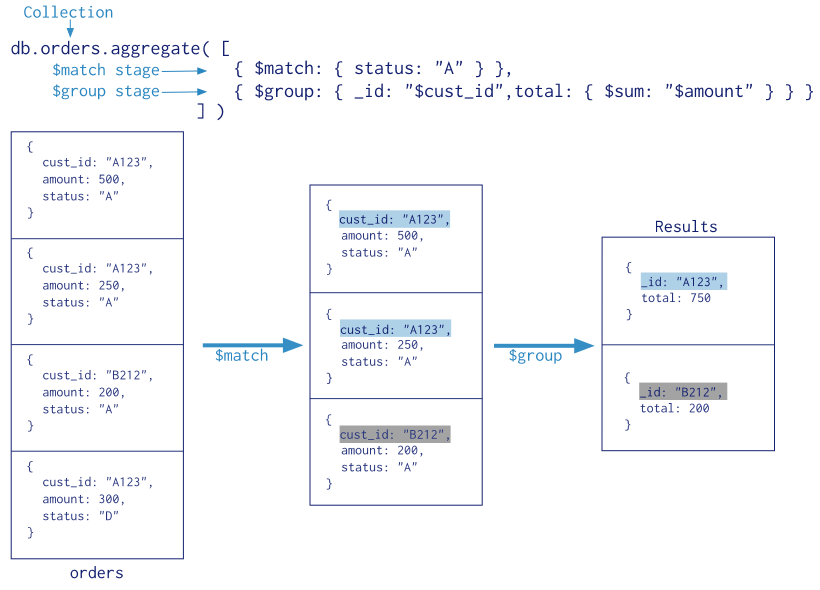
MongoDB’s aggregation framework is modeled on the concept of data processing pipelines. Documents enter a multi-stage pipeline that transforms the documents into an aggregated result.
The pipeline provides efficient data aggregation using native operations within MongoDB, and is the preferred method for data aggregation in MongoDB.
The aggregation pipeline can operate on a sharded collection.
Map-Reduce
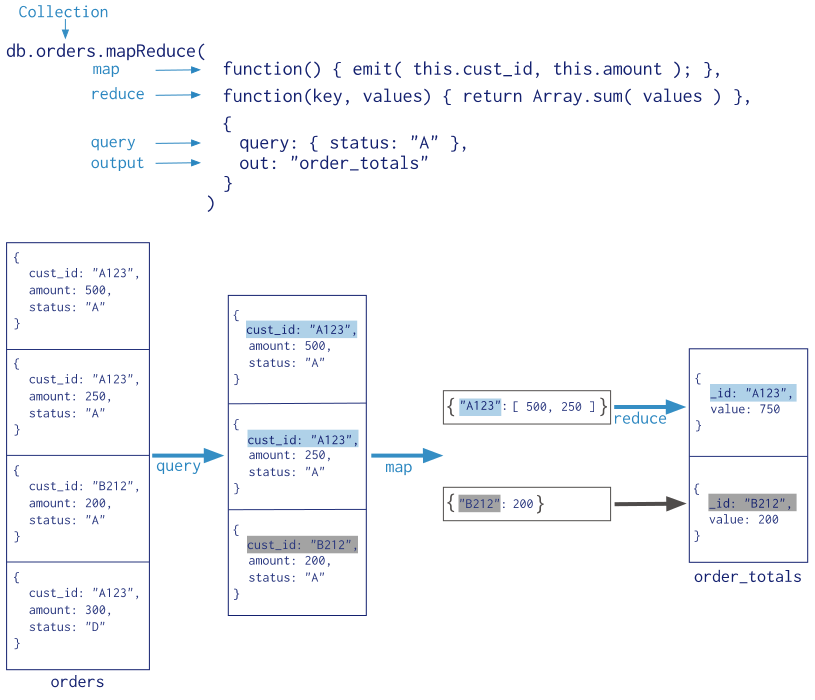
MongoDB also provides map-reduce operations to perform aggregation. In general, map-reduce operations have two phases: a map stage that processes each document and emits one or more objects for each input document, and reduce phase that combines the output of the map operation.
Map-reduce uses custom JavaScript functions to perform the map and reduce operations, as well as the optional finalize operation. While the custom JavaScript provide great flexibility compared to the aggregation pipeline, in general, map-reduce is less efficient and more complex than the aggregation pipeline.
Map-reduce can operate on a sharded collection. Map-reduce operations can also output to a sharded collection.
Single Purpose Aggregation Operations
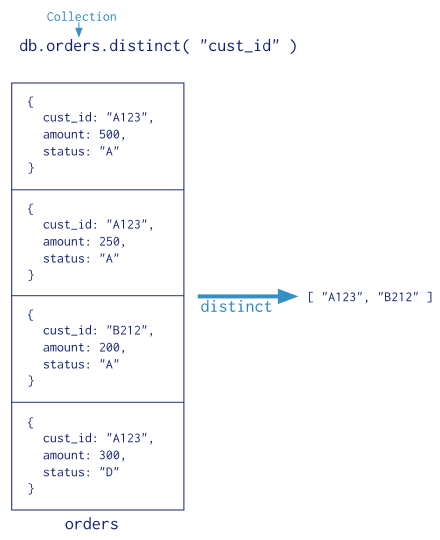
MongoDB also provides db.collection.count() and db.collection.distinct().
All of these operations aggregate documents from a single collection. While these operations provide simple access to common aggregation processes, they lack the flexibility and capabilities of the aggregation pipeline and map-reduce.